
Hunger Monitor Report Confirms Growing Food Insecurity
Māngere Budgeting Services Trust says it is not surprised by the latest findings from the New Zealand Food Network’s Hunger Monitor Report 2025, which shows that 33% of New Zealanders experienced food insecurity over the past year.
The report highlights even more concerning levels of food insecurity among some communities. Pacific peoples experience the highest rates, with 64% reporting food insecurity, while 51% of Māori are also affected. Larger households are particularly vulnerable, with 59% of households with six or more people struggling to access enough food. The situation is even more difficult for single-parent households with children, where food insecurity reaches 70%.
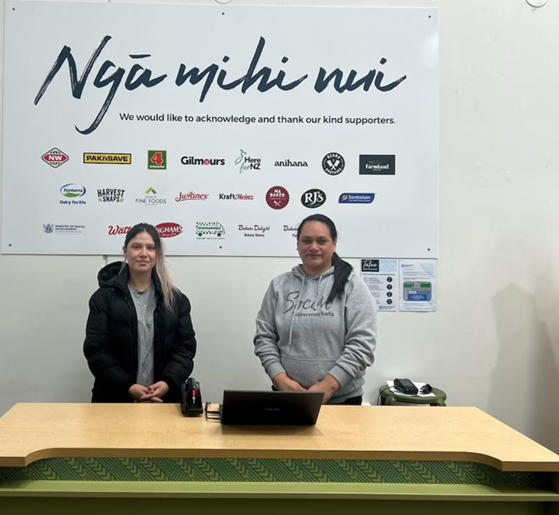
Tatou Social Supermarket staff Rosanna (TL) & Maureen
MBST Chief Executive Lara Dolan says these statistics reflect what the organisation is seeing daily in South Auckland.
“We are seeing more and more whānau struggling to put food on the table. The cost of living remains the main reason why people are accessing our services.” Dolan says demand for food support has increased significantly.
“In the 2025 financial year, we saw demand for food support increase by 49%, and in the year to January 2026, we are already supporting 20% more people compared to the same period last year.”
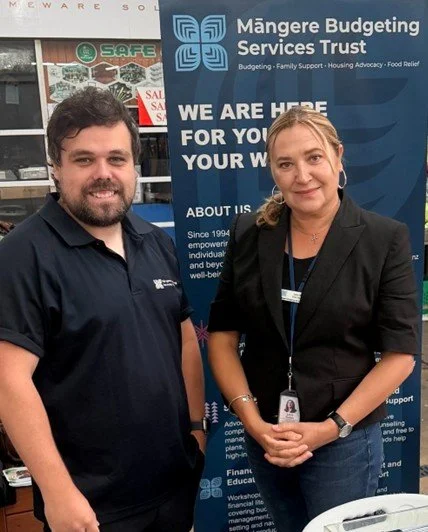
Financial Mentor Jack and CEO Lara Dolan
Rosanna Nicholson, Social Supermarket Team Leader at MBST, says it is heartbreaking to see how many families with children are unable to afford basic food.
“Many of the families we support are in part-time employment, but the rising cost of living means their income simply does not stretch far enough to meet everyday needs.”
Nicholson says that alongside food support, MBST is helping families develop practical skills to manage household budgets and prepare affordable meals.
“We are seeing many people changing their habits and learning how to cook simple, cost-effective meals. That’s something we are very proud of at MBST because it helps families build long-term resilience.”
Jack Leary, MBST’s Financial Mentor, says that many clients turn to MBST after covering essential costs such as rent, power, and transport, leaving little or nothing for food.
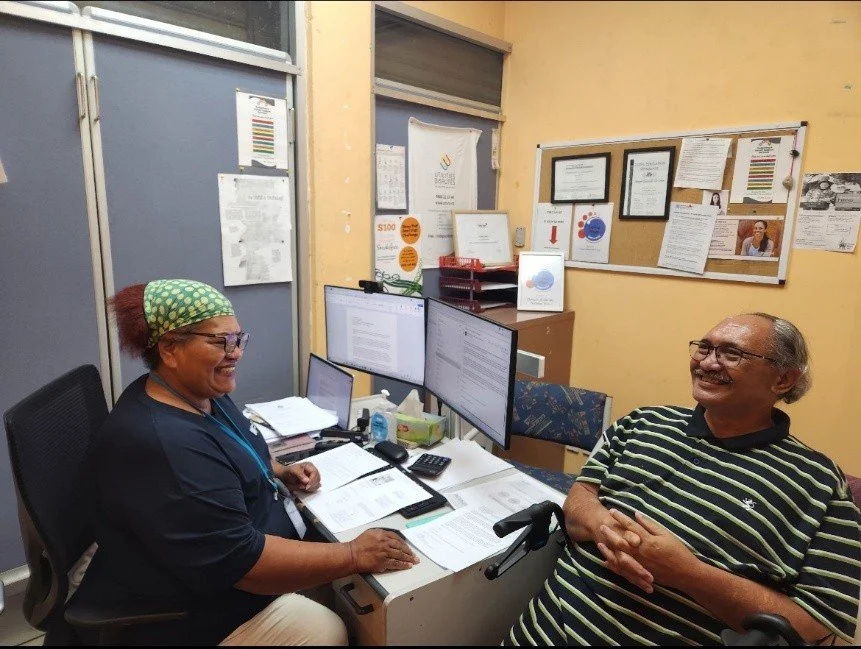
Financial Mentor Tuli with client
“After paying their essential bills, many families simply don’t have enough left to buy groceries. That’s when they come to us for support.”
Mangere Budgeting Services believes that food support programmes would not be possible without strong community partnerships.
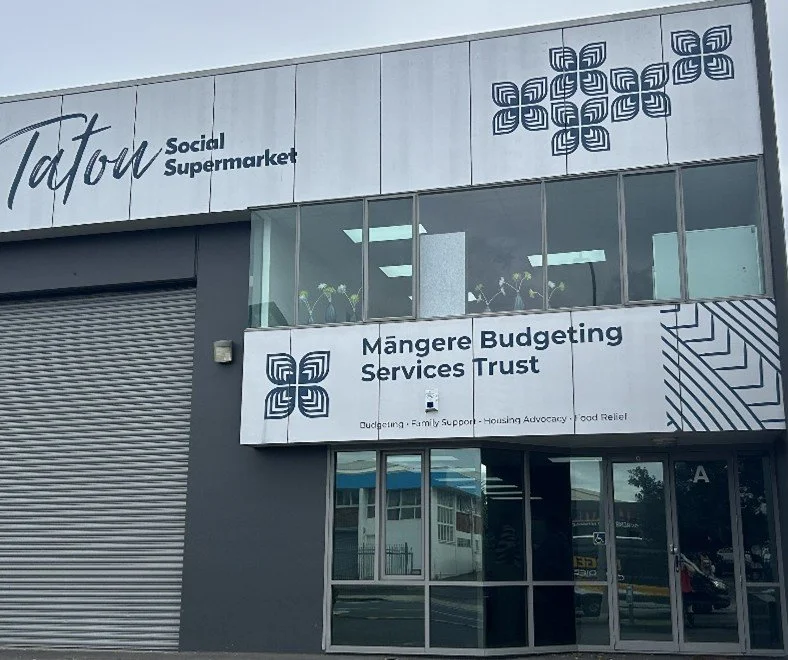
Mangere Budgeting Services Trust Main Office - Otahuhu
“We are incredibly grateful to supporters such as KiwiHarvest, Foodstuffs North Island, Fonterra, Meet the Need, Beard Brothers, Mangere PAK’nSAVE and many others. Without their generosity, many more New Zealanders would go without food.”
Dolan says the rising demand highlights the need for greater government support.
“Community organisations like ours are doing everything we can to support families during difficult times. We urge the Government to step in and ensure that organisations providing essential support have the resources needed to continue helping those most in need.”